
Prof. S. M. Balaji meets Prof. Tetsuo Kanno, World Renowned Neurosurgeon from Japan
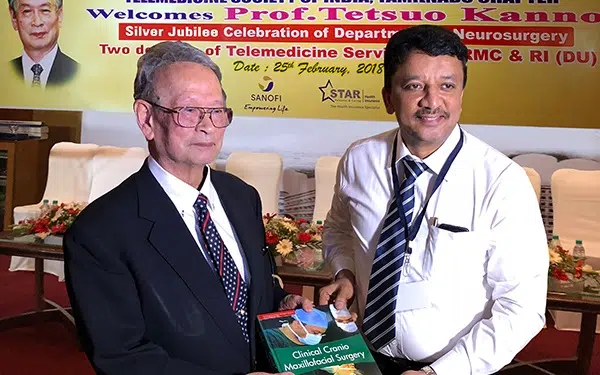
Silver Jubilee Celebration of the Department of Neurosurgery, Sri Ramachandra Medical College and Research Institute Prof. S.M. Balaji, Founder-Director, Balaji Dental and Craniofacial Hospital, Teynampet, Chennai, was invited to attend the silver jubilee celebration of the Department of Neurosurgery at the Residency Towers, Chennai, which was organized by the Department of Neurosurgery, Sri Ramachandra Medical College and Research Institute along with the Telemedicine Society of India, Tamilnadu Chapter. The Chief Guest was Dr. C. Vijayabaskar, Hon’ble Minister of Health and Family Welfare, Govt of Tamil Nadu and the Guest of Honor was Prof. Tetsuo Kanno, Honorary President, World Federation of Neurosurgical Societies, Founder President, American Clinical Neurophysiological Society, and Honorary Professor of Neurosurgery, Fujita Health University, Japan. Dr. Tetsuo Kanno was also the personal Neurosurgeon of late Dr. M.G. Ramachandran, Ex-Chief Minister, Tamil Nadu. Prof. Tetsuo Kanno Prof. Balaji met with Prof. Kanno at the dinner organized in honor of Prof. Kanno and personally honored him with a shawl. He also presented Dr. Kanno with a copy of his textbook, “Clinical Cranio-Maxillofacial Surgery” and elucidated the salient features of the book. Also present at the function were Shri. V. R. Venkataachalam, Chancellor, SRMC & RI (DU) and Dr. P. V. Vijayaraghavan, Vice-Chancellor, SRMC & RI (DU).
Primary lip repair for unilateral cleft lip and palate
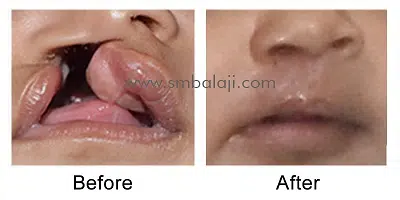
[vu_heading style=”1″ heading=”Unilateral Cleft Lip Repair” alignment=”left” custom_colors=”” class=””] A 3-month old baby girl born with wide unilateral cleft lip & palate was brought to our hospital by her parents seeking the best treatment for cleft lip and palate. The parents were greatly perturbed by their baby girl’s condition. Maxillofacial Surgeon Dr. S.M. Balaji performed the primary unilateral cleft lip repair surgery using Modified Millard’s technique. Following surgery, the baby appearance improved greatly and looked like any other baby of her age with minimal to no scar. The parents were overjoyed with the results. Consecutively cleft palate correction surgery will be done at a later date.
Successful removal of sizable odontogenic keratocyst and reconstruction of lower jaw

A 13 year old girl from Manipur was brought to our hospital by her parents seeking the best treatment for facial asymmetry. The girl initially presented with a complaint of huge swelling in the right side of the face which was increasing in size. The parents were greatly worried about their daughter’s present condition. Through clinical and radiological investigations revealed a large radiolucent lesion involving the entire ramus and angle of the mandible extending to the lateral side of lower right first molar teeth. Biopsy of the lesion confirmed the lesion to be odontogenic keratocyst. The parents were explained that the facial asymmetry was only due to the cystic contents. Maxillofacial Surgeon Dr.S.M.Balaji planned to do segmental mandibulectomy followed by reconstruction with rib graft. Dr.S.M.Balaji successfully removed the cyst completely along with the affected bone and teeth. Rib graft was harvested and used to reconstruct the jaw bone defect and the surgical site was closed. After subsequent healing, implants & ceramic crowns will be placed for permanent replacement of lost teeth.
Successful correction of long and deviated lower jaw – facial asymmetry without any scars
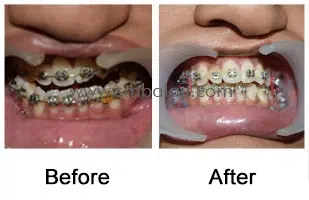
A 23-year-old girl reported to our hospital seeking to correct her protruding and deviated lower jaw. She was discontent with her facial appearance and mentioned about her inability to chew food. After thorough clinical and radiological examination, Maxillofacial Surgeon Dr. S. M. Balaji planned to correct her bite both orthodontically and surgically. Presurgical orthodontic treatment was started and the teeth were aligned. Through intraoral approach, bilateral sagittal split osteotomy (Obwegesers and short lingual split technique) was done and the excessive length of the mandible was reduced. The patient was beaming with joy on seeing the results as there was no visible post-surgical scar. Her speech and ability to chew food also improved markedly.
Oral Submucous Fibrosis, Complete Trismus Release, Excision of Fibrous Bands and Nasolabial Flap Reconstruction
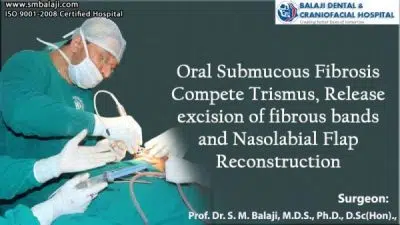
[et_pb_section fb_built=”1″ _builder_version=”3.22″][et_pb_row _builder_version=”3.25″ background_size=”initial” background_position=”top_left” background_repeat=”repeat”][et_pb_column type=”4_4″ _builder_version=”3.25″ custom_padding=”|||” custom_padding__hover=”|||”][et_pb_text _builder_version=”3.27.4″ background_size=”initial” background_position=”top_left” background_repeat=”repeat”]Oral Submucous Fibrosis (OSMF) is a pre-cancerous condition seen predominantly in the Indian subcontinent and South East Asia. In this condition, the deep tissues of the cheeks become thick and fibrosed leading to severely restricted mouth opening, referred to as trismus. ] There is great difficulty in opening the mouth, patients cannot tolerate hot and spicy food, and the cheek lining inside the mouth becomes pale, blanched or marble-like. This is a very serious condition because it has high chances of advancing into mouth cancer (squamous cell carcinoma). The most common cause of this pre-cancerous condition is chewing of tobacco/areca nut. The patient is a middle-aged man with oral submucous fibrosis who presented to Dr. S. M. Balaji, Craniofacial Surgeon, Chennai with complete trismus as a result of which he couldn’t open his mouth more than a few mm. Upon taking a history, it was found that he had been chewing paan or betel quid containing betel leaf, areca nut, and slaked lime for the past 15 years. The patient also complained of a burning sensation in his mouth. Upon palpating his cheeks, thick, tight bands of tissue could be felt lining his cheeks and he had jaw rigidity. Surgical intervention was the only viable option. General anesthesia was given through Flexible Fibreoptic Intubation (FFI) since he had very limited mouth opening. Cuts were placed in the inner cheek and the thickened bands of fibrous tissue were excised. Mouth opening was increased to the normal 3-4 cm using a mouth gag. An inferiorly based nasolabial flap based on the facial artery was taken in such a way that the flap margin fell in the skin fold and post-surgery scar is inconspicuous. The flap was rotated, tunneled into the mouth, and sutured to the inner cheek. The nasolabial incision was closed in layers. This was done on both sides. The patient was prescribed mouth-opening exercises and counseled on complete cessation of the habit. [/et_pb_text][et_pb_video src=”https://www.youtube.com/watch?v=em5jPlYQ1tI” _builder_version=”4.9.4″ _module_preset=”default”][/et_pb_video][/et_pb_column][/et_pb_row][/et_pb_section]
Dentigerous Cyst Enucleation Surgery
[et_pb_section fb_built=”1″ _builder_version=”3.22″][et_pb_row _builder_version=”3.25″ background_size=”initial” background_position=”top_left” background_repeat=”repeat”][et_pb_column type=”4_4″ _builder_version=”3.25″ custom_padding=”|||” custom_padding__hover=”|||”][et_pb_text _builder_version=”3.27.4″ background_size=”initial” background_position=”top_left” background_repeat=”repeat”]This teenage boy had been complaining of pain on the left side of his lower jaw for a few days now. There were a few teeth missing on that side. He was brought to Balaji Dental and Craniofacial Hospital, Teynampet, Chennai, by his parents for treatment. Dr. Balaji examined the patient and ordered diagnostic studies including an OPG, which revealed multiple unerupted impacted teeth and a radiolucent area in relation to the lower left first molar. A 3D axial CT scan was ordered and the diagnosis of a dentigerous cyst was made. It was explained to the patient and his parents that this had to be managed surgically and they were in full agreement with that. The patient was taken to the operating room and general anesthesia was induced. A mucogingival flap was raised and reflected down to the sulcus. The dentigerous cyst was enucleated in its entirely and two unerupted teeth within the cyst were removed. The flap was then sutured and the patient recovered uneventfully from general anesthesia. [/et_pb_text][et_pb_video _builder_version=”4.9.4″ _module_preset=”default” src=”https://www.youtube.com/watch?v=FE0yX-T7utU&t=50s” hover_enabled=”0″ sticky_enabled=”0″][/et_pb_video][/et_pb_column][/et_pb_row][/et_pb_section]
Primary Incomplete Unilateral Cleft Lip and Palate Surgery
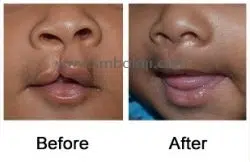
A 3-month old baby girl was brought to our hospital seeking the best possible treatment for incomplete unilateral cleft lip and palate. The parents were greatly worried about their baby girl’s present condition and also complained about the difficulty in feeding her. Cranio-Maxillofacial Surgeon Dr. S.M. Balaji performed the primary incomplete lip repair surgery for unilateral cleft lip using Modified Millard’s technique. Following surgery, the baby appeared as any other normal baby of her age and was able to feed well. The parents were very pleased with the results.
Re-alveolar bone graft Surgery, Fistula Closure and Cleft Rhinoplasty Surgery
[et_pb_section fb_built=”1″ _builder_version=”3.22″][et_pb_row _builder_version=”3.25″ background_size=”initial” background_position=”top_left” background_repeat=”repeat”][et_pb_column type=”4_4″ _builder_version=”3.25″ custom_padding=”|||” custom_padding__hover=”|||”][et_pb_text _builder_version=”3.27.4″ background_size=”initial” background_position=”top_left” background_repeat=”repeat”]This young girl had been born with a left-sided cleft lip, alveolus, and palate. She had undergone repair of her cleft lip as an infant with an alveolar rib graft, but the graft hadn’t fused with the bone and had been a failure. She had developed an asymmetry of her nose because of this and a deficiency in the development of the cartilaginous part of her columella, which had lead to a collapsed left nostril. This had made her very quiet and withdrawn, isolating herself from her peers at school. The alveolar cleft in the region of her left lateral incisor was causing a direct communication with her nasal cavity through an oronasal fistula, which was leading to regurgitation of fluids from her mouth into her nasal cavity. Her parents had been enquiring everywhere as to where her defect would be best set right and had finally been referred to Balaji Dental and Craniofacial Hospital, Teynampet, Chennai. Dr. S. M. Balaji, Cranio-Maxillofacial Surgeon, examined the patient thoroughly and ordered comprehensive imaging studies including a 3D axial CT scan. He then explained the treatment plan in detail to the parents of the patient and they expressed their desire to go ahead with surgery. After satisfactory induction of general anesthesia, two costochondral rib grafts were obtained from the patient. The wound was then closed in layers after ascertaining patency of the pleural cavity through the positive pressure ventilation test. Following this, mucogingival and palatal flaps were raised on the left side of the patient’s maxillary region at the region of the alveolar cleft defect. Costochondral rib grafts were shaped and crafted to fit into the area of bony defect and fixed with screws. Attention was next turned to the collapsed columella. A costochondral rib graft that had been shaped to precisely fit into the columella was inserted along the length of its base and stabilized in place with sutures. This lifted up the collapsed columella of the nose and set right the deformity to the left nostril. The palatal and the mucogingival flaps were then closed with sutures and the patient recovered uneventfully from general anesthesia. The patient expressed her happiness to Dr. Balaji for setting right the deformity to her nose and her parents expressed their gratitude to Dr. Balaji for enabling an improvement in the aesthetic as well as functional quality of life for the patient. [/et_pb_text][et_pb_video src=”https://www.youtube.com/watch?v=ufiBluI_hic” _builder_version=”4.9.4″ _module_preset=”default”][/et_pb_video][/et_pb_column][/et_pb_row][/et_pb_section]
Cleft Rhinoplasty- Nasal Augmentation and Buckling Correction Surgery
[et_pb_section fb_built=”1″ _builder_version=”3.22″][et_pb_row _builder_version=”3.25″ background_size=”initial” background_position=”top_left” background_repeat=”repeat”][et_pb_column type=”4_4″ _builder_version=”3.25″ custom_padding=”|||” custom_padding__hover=”|||”][et_pb_text _builder_version=”3.27.4″ background_size=”initial” background_position=”top_left” background_repeat=”repeat”]The patient is a young girl who was born with a left-sided unilateral cleft lip defect. She was operated upon as an infant at an outside hospital, but that correction had left her with an unsightly residual scar. She had slight lip incompetency on the left side in association with the scar tissue. There was also a buckling of the left nostril. This had lead to taunts and jibes at school from other children, which lead to her becoming withdrawn and quiet. Her worried parents brought her over to Balaji Dental and Craniofacial Hospital, Teynampet, Chennai, where she was thoroughly examined by Dr. S. M. Balaji, Cranio-Maxillofacial Surgeon, who suggested a minor scar revision procedure and nasal augmentation with buckling correction surgery. He explained to them that this involved harvesting a costochondral rib graft from the patient to be used to augment the bridge of the nose and her parents were in full agreement with that. Upon induction of adequate general anesthesia, a costochondral rib graft was harvested and the wound was closed in layers with sutures. Following this, the minor scar revision surgery was performed with release of fibrous bands from the scar tissue, which lead to improvement in the patient’s lip incompetency. Next an intranasal incision was made at the region of the lateral crus and a tunnel was created extending up to the bridge of the nose. The cartilaginous rib graft was then manipulated into position resulting in a straighter profile to the nose along with correction of the nasal buckling of the left nostril. The incision was then closed with sutures. The patient was overjoyed at the results of the surgery and couldn’t stop smiling, thanking Dr. Balaji profusely for the way he had set right her problem. [/et_pb_text][et_pb_video _builder_version=”4.9.4″ _module_preset=”default” src=”https://www.youtube.com/watch?v=Lw6nQ_xlrpk” hover_enabled=”0″ sticky_enabled=”0″][/et_pb_video][/et_pb_column][/et_pb_row][/et_pb_section]
BACK TO GOLDEN TIMES – A Continuing Dental Education (CDE) program
A Continuing Dental Education (CDE) program is being jointly organized on February 25, 2018, by the International College of Dentists-India, Nepal, and Sri Lanka Section, Indian Academy of Gold Foil Operators (Division of American Academy of Gold Foil Operators) & IDA Madras Branch at the state of the art conference hall at Balaji Dental and Craniofacial Hospital, Teynampet, Chennai. Gold was the first material to be used to restore teeth and restorations done with gold are amongst the most durable and long-lasting ones. Gold restorations are however technique sensitive and not widely practiced. The purpose of the CDE that is being conducted by experts in gold restorations is to hone the skills and introduce new techniques that have been developed around the world to those who are interested in pursuing a career in gold restorations. This is a CDE program where certificates will be given to the participants at the completion of the program. The faculty for the CDE program is headed by Dr. Alfred W. Foltz, DMD who was the president of the American Academy of Gold Foil Operators in 2016. He has always been an outstanding academician who has won many accolades in his illustrious career. He has been the recipient of the “Commissioned Officer Award for Superior Service” by the USA Public Health Services. He has also been awarded the “Clinician of the Year Award” by the American Academy of Gold Foil Operators. He was the co-organizing chairman of the first-ever World Summit on Gold Restorations that was held in Chennai in 2017 and also conducted an advanced course on gold foil restorations and lectures at that summit. Dr. Foltz will be delivering a lecture on direct gold foil restorations in the morning session of the CDE program. He will be conducting a table demonstration of a direct gold filling in the afternoon session. At the completion of the CDE, the participants will personally receive certificates for attending the program from Dr. Alfred Foltz.